
Enhancing Patient Access by Utilizing Artificial Intelligence-powered Tools
Tevogen.AI aims to integrate advanced machine learning and predictive modeling into Tevogen Bio’s proprietary ExacTcel™ technology to significantly enhance its target identification and pre-clinical processes, thereby strengthening Tevogen Bio’s pipeline of innovative immunotherapies, accelerating clinical timelines, and substantially reducing development costs.
Goals
Target Detection
We are exploring ways to deploy AI-powered target detection to further accelerate our product development pace, either internally or in collaboration with others.
Reducing Failure Rates
AI could use data patterns to foresee potential adverse drug reactions early on, potentially averting costly trial failures. It might also flag efficacy concerns, guiding timely adjustments to enhance the probability of success.
Optimizing Clinical Trials
AI algorithms could analyze data to identify patients who would be most likely to respond to the investigational therapy.
Proprietary Technologies
Tevogen.AI will leverage Microsoft’s digital infrastructure, scientific research, and AI expertise, along with Databricks’ data engineering capabilities, to power the development of its proprietary technologies.
PredicTcell™
A suite of AI algorithms that predict immunologically active peptide-T cell receptor interactions to enhance precision immunotherapy. Continuously refined through reinforcement learning, PredicTcell accelerates in-vivo processes and expands Tevogen Bio’s pipeline. Its growing terabyte-scale database analyzes millions of protein-peptide interactions across diseases and the human genome.
AdapTcell™
AI-driven algorithms decoding human leukocyte (HLA) antigens and T cell interactions to deepen immune system insights and reveal new therapeutic paths. As understanding grows, AdapTcell models conduct in-silico experiments that inform genetics, proteomics, and build a high-resolution HLA specificity map.
Recent Highlights
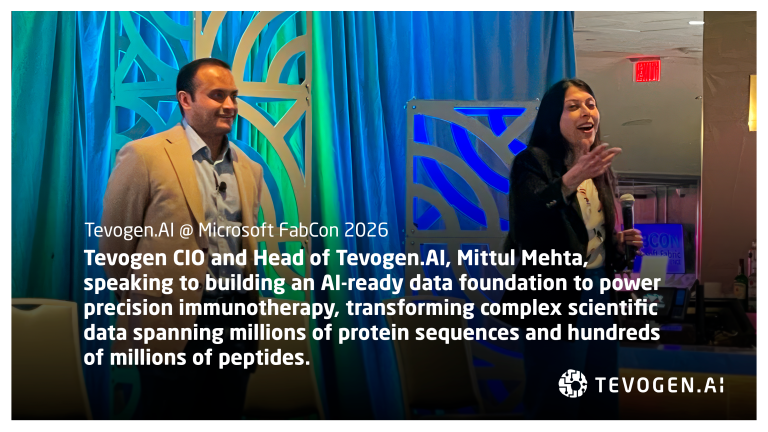



Journey to the Holy Grail
“When we stood up Tevogen.AI, the conviction was clear: AI wasn’t going to be a support function. It was going to be a frontier capability that fundamentally changed how we read, understand, and act on complex biological data.”
– Mittul Mehta, CIO and Head of Tevogen.AI

Single protein string, peptides selected by an external entity presented issues with heterogeneity.
|

Leveraging off the shelf models to scale candidate analysis was met with high false positive rates and extensive wet lab validation.
|

Initiated contracts with Microsoft and Databricks. Alpha version of PredicTcell trained on small subset to prove theoretical design. Successful results propelled next phase.
|

Expanded relationship with Microsoft and Databricks. Pipelines created to ingest terabyte scale datasets across a spectrum of viruses, cancers and genetics for analysis. Included genetic proteins to expand training data for proprietary models (scaled 100,000 to 1,800,000). Greatly reduced false positive rates and improved on peptide prediction.
|

The expansion of training data uncovered key insights in peptide<->HLA interactions, enabled asking detailed and important questions regarding the specifics of amino acid chains such as anchor amino acids, biochemical properties of mid chain amino acids and HLA specificity.
|

Predict the proteome for any given combination of protein and HLA type
Through our partnership with Avanade and Microsoft, we delivered an enterprise data platform for our R&D teams to study our library of proteins and peptides.
The visual below represents one of many data stories now available to our scientists. Built on Microsoft Fabric, it enables faster exploration, clearer patterns, and shared understanding across disciplines.

Media
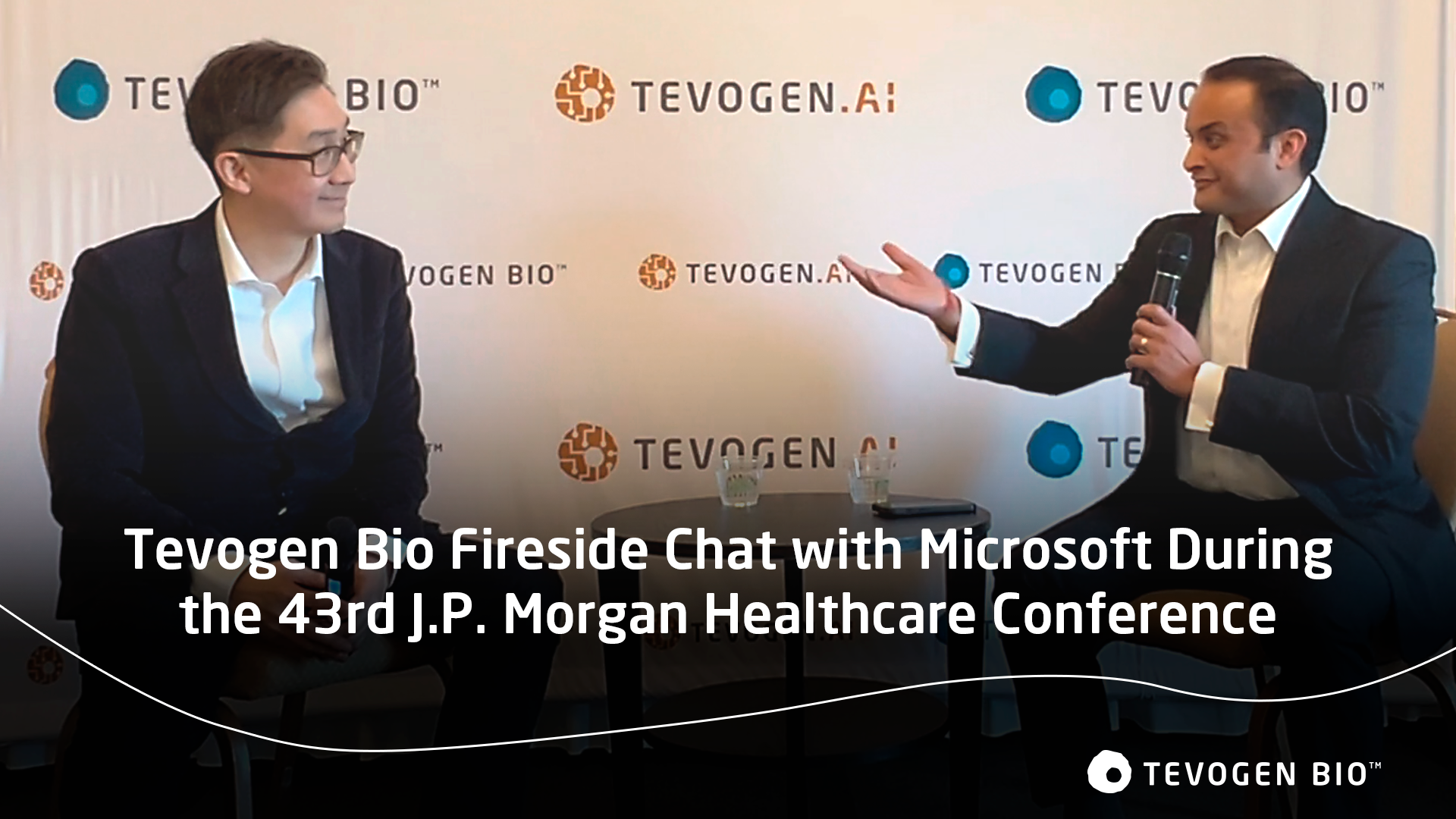


A healthier world is possible when lifesaving innovations are within the reach of all
Tevogen Bio is driven by a team of highly experienced industry leaders and distinguished scientists with drug development and global product launch experience. Tevogen Bio’s leadership believes that accessible personalized immunotherapies are the next frontier of medicine, and that disruptive business models are required to sustain medical innovation in the post-pandemic world.

© 2026 Tevogen Bio, Tevogen.AI. All Rights Reserved.